
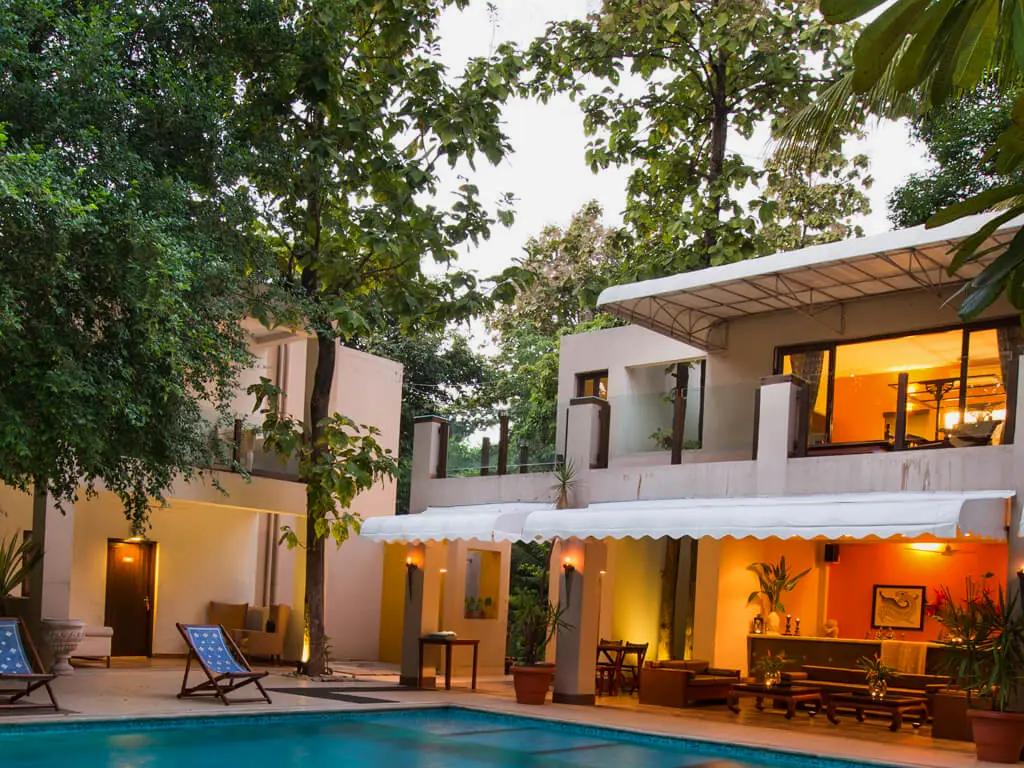
The short version: Alibaug in the monsoon is greener, emptier and cheaper than the season everyone else visits — and it’s the time of year we’d choose for ourselves. The catch: most passenger ferries stop for the rains, so you’ll usually drive. Do that, and you get the coast almost to yourself.
Here is the case for coming when nobody else does.
From June to September, most of Mumbai writes Alibaug off. The ferries thin out, the beaches lose their crowds, the water-sports touts pack up. And the people who know this coast quietly exhale, because this is when it becomes itself again.
We run five houses here, and if you asked any of our staff which months they’d pick to actually be a guest, almost all of them would say the monsoon. Here’s why.
What the Rains Actually Do to This Place
The plantations turn a green that simply doesn’t exist in the dry months — the kind of saturated, dripping, alive green you get only when it’s been raining for a week. The coconut and betel-nut palms glow. The paddy fields around the villages flood and shine.
The birds come back. Kihim has been a birdwatcher’s corner since Dr. Salim Ali — India’s most famous ornithologist — stayed here, and the monsoon is when the birdlife is at its loudest and most active. You’ll wake to it whether you meant to or not.
And the sea turns dramatic. Not for swimming — more on that below — but for watching. There is a specific pleasure in sitting dry on a veranda with a cup of chai while the Arabian Sea throws itself around a hundred metres away.
The whole coast, in short, stops performing for tourists and goes back to being a working, breathing stretch of the Konkan. That’s the thing you’re coming for.
The Honest Downsides (Because There Are Some)
We’d rather you arrive knowing exactly what the monsoon is and isn’t.
- The sea is for looking, not swimming. Monsoon currents along this coast are strong and genuinely dangerous. Enjoy the beach from the sand, not the water. Your villa pool is where you swim.
- Water sports are closed. Parasailing, jet-skis, banana boats — all of it shuts for the season. If that’s the trip you had in mind, come in winter instead.
- Most passenger ferries stop. The Gateway-to-Mandwa catamarans generally suspend service through the rains. You’ll drive, or take the year-round Ro-Ro. (Full detail below.)
- It rains. Properly. This is not a light drizzle you can plan around. Some days it simply pours, and the plan becomes a book, the veranda, and a long lunch. If that sounds like a punishment rather than a holiday, the monsoon isn’t your season — and that’s fine.
- The odd power flicker. Rural coast, heavy weather — it happens. Our properties have generator backup, but restoration can take a little time in a serious storm.
None of this is hidden fine print. It’s just what the season is. If you want guaranteed sunshine and a swim in the sea, book us in winter. If you want green, quiet and drama, read on.
Getting Here in the Rains
This is the one bit of monsoon planning that catches people out, so here it is plainly.
- Passenger ferries (Gateway of India → Mandwa): generally suspended for the monsoon. Assume they’re not running and plan another way.
- The M2M Ro-Ro: usually keeps operating year-round, pausing only for genuinely severe weather. It carries cars and pets, which makes it the monsoon-friendly ferry.
- By road: your most reliable option. The Atal Setu has made the drive from Mumbai far quicker than it used to be. Drive carefully — the roads are slick and visibility can drop around the ghats.
We’ve written the full breakdown — every route, timing and cost — here: How to Reach Alibaug from Mumbai.
What to Actually Do on a Rainy Weekend
The trick to a monsoon trip is to stop fighting the weather and start using it. A wet weekend here is not a washout — it’s a different, slower kind of good.
- Eat, seriously. The monsoon is coastal-food weather. Hot Malvani curries, fresh-fried fish, something spiced and steaming while it comes down outside — this is what our kitchen is for, and it lands differently in the rain.
- Watch the storm from the veranda. Underrated. A pot of chai, the sea in the distance, and nowhere you have to be.
- Swim in the pool while it rains. One of the small, ridiculous joys of the monsoon — warm water, cool rain, nobody else around.
- Birdwatch. You barely have to try. Kihim’s birdlife is at its best now; even a slow walk between showers turns up plenty.
- Explore between showers. The rain here often comes in bursts. When it lifts, the forts and temples — Kankeshwar, Kolaba, the quiet corners of Kihim — are greener and emptier than you’ll ever see them.
- Do nothing, together. Indoor games, a long lunch, a house full of people and nowhere to rush off to. The monsoon gives you permission for the kind of weekend that sunshine somehow never does.
Which House Suits the Monsoon Best
All five of our properties are good in the rains, but two are especially suited to a cosy, weather-in weekend.
Casa Mango — the most intimate of the five, two bedrooms and a plunge pool. For a couple, a monsoon weekend here is about as snug as this coast gets: rain on the roof, nowhere to be, nobody else around.
Mango Villa — one of the oldest houses in Kihim, full of character, with a pool and a garden that come alive in the wet. A small family or a few friends will find it especially atmospheric now.
That said, if you’re a larger group, the bigger houses work beautifully too — more indoor space to spread out when it’s coming down hard. If you’re not sure which fits, our guide to all five villas will help, or just tell us your group and we’ll point you to the right one.
Is the Monsoon Right for You? A Straight Answer
Come in the monsoon if: you want green over gold, quiet over crowds, and you’re the sort of traveller who finds a rainy veranda romantic rather than ruined. If you love food, birds, and having a beautiful place nearly to yourself.
Come another season if: you specifically want to swim in the sea, do water sports, or you need reliable sunshine for the trip to feel worth it. Winter on this coast is glorious and open — there’s no wrong answer, just a right season for what you want.
We’ll tell you honestly, too. Ask us what your dates are likely to be like, and we won’t oversell you a washout.
Frequently Asked Questions
Is Alibaug worth visiting in the monsoon?
Yes, if you know what you’re coming for. The monsoon brings lush green plantations, active birdlife, dramatic seas and far fewer crowds. You can’t swim in the sea and water sports are closed, but for greenery, food and quiet it’s one of the best times to visit.
Can you swim in the sea at Alibaug during the monsoon?
No. Monsoon currents along this coast are strong and dangerous, and sea swimming is not advised. Enjoy the beach from the sand, and swim in your villa’s private pool instead.
Do the Mumbai to Alibaug ferries run in the monsoon?
The passenger catamarans from the Gateway of India generally suspend service through the monsoon. The M2M Ro-Ro usually keeps running year-round, pausing only for severe weather, and it carries cars and pets. Driving is the most reliable option in the rains.
What is there to do in Alibaug when it rains?
Plenty that suits the weather: coastal Malvani food, birdwatching, watching the storm from a veranda, swimming in the pool as it rains, and exploring the forts and temples between showers when the crowds are gone.
Which months are the monsoon in Alibaug?
Roughly June to September, with the heaviest rain usually in July and August. Ferry schedules and sea conditions change through the season, so confirm the latest before you travel.
Are the villas open during the monsoon?
Yes. Our properties operate year-round, with generator backup for the occasional weather-related power interruption. Ask us about availability for your dates.
Come When Nobody Else Does
The best-kept secret about this coast is simply the season most people skip. If green, quiet and a house nearly to yourself sound like the weekend you actually want, the monsoon is waiting.